7 Powerful Reasons Every Program Needs a Gear Tracking System Today
Every coach has lived it. Helmets missing after practice. Jerseys unaccounted for. Hours spent chasing down gear instead of coaching players. At the youth and high school level, equipment chaos is not just frustrating. It is expensive, time-consuming, and avoidable.
As programs grow and budgets tighten, the margin for error shrinks. Spreadsheets, paper sign-out sheets, and memory-based tracking simply do not scale. That is why more programs are turning to a gear tracking system to bring structure, accountability, and peace of mind back to their operations.
A modern gear tracking system is not about technology for technology’s sake. It is about giving coaches control, saving time, and protecting program investments. This article breaks down why every program needs one now, not later.
What Is a Gear Tracking System and Why Does It Matter?
A gear tracking system is a digital platform that allows coaches to manage equipment inventory, assign gear to players, track check-ins and check-outs, and monitor disposal items like practice apparel or accessories.
Instead of guessing who has what, coaches see everything in one place. Every helmet, pad, jersey, and bag is accounted for. This level of visibility changes how programs operate.
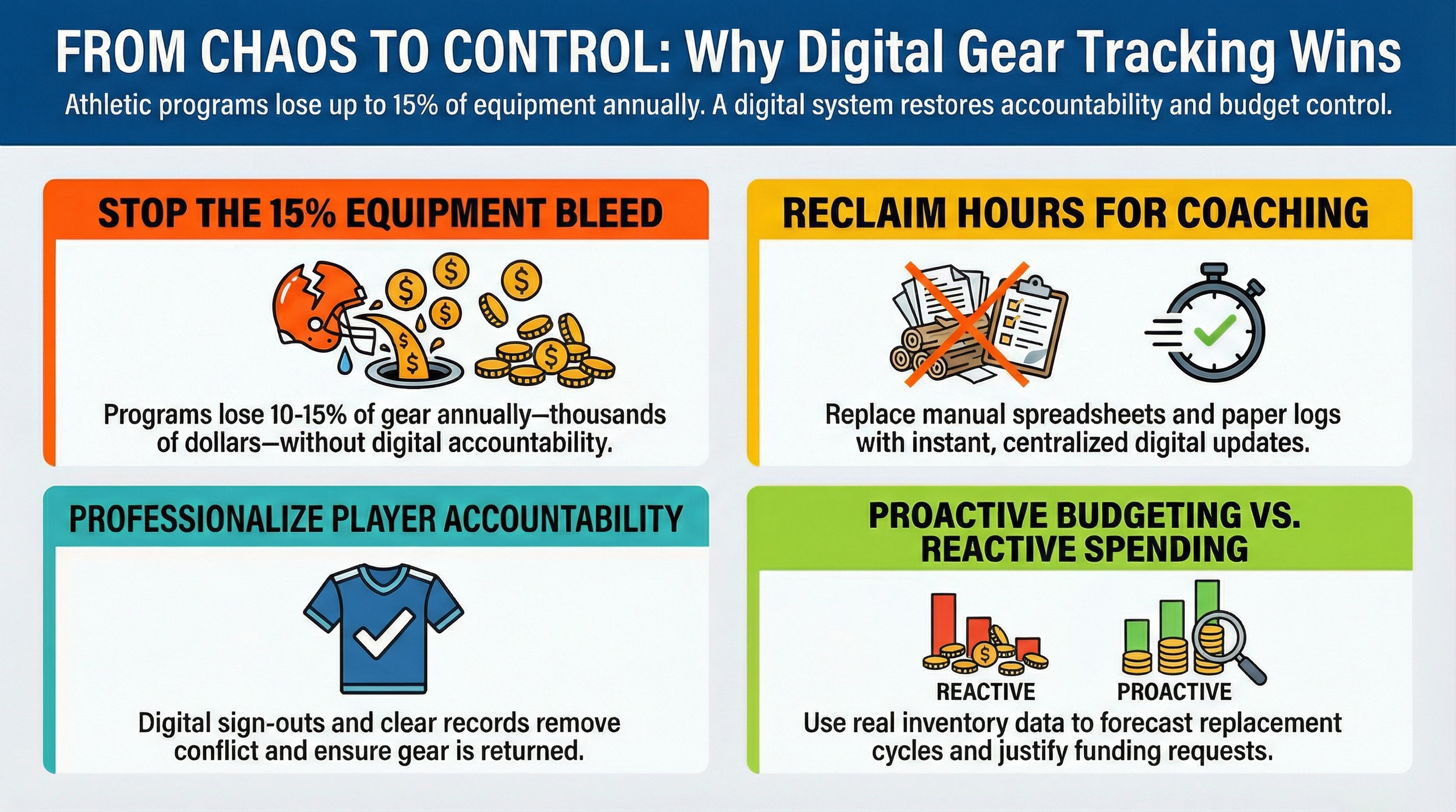
According to industry estimates, athletic programs lose 10 to 15 percent of equipment annually due to poor tracking and accountability. For football programs, that can mean thousands of dollars walking out the door each season.
7 Reasons Every Program Needs a Gear Tracking System
1. Eliminate Lost and Unreturned Equipment
Lost gear is not just a budget issue. It impacts player safety and readiness. A gear tracking system assigns responsibility clearly. Players know what they are checked out. Coaches know what is missing instantly.
When accountability is built into the process, losses drop fast.
2. Save Coaches Hours Every Week
Most coaches are not short on effort. They are short on time. Manual tracking eats into prep, film, and family time.
A centralized system replaces spreadsheets, clipboards, and follow-up emails. Updates happen in seconds, not hours. That time goes back to coaching where it belongs.
This aligns directly with Sideline HQ’s mission to give coaches peace of mind and remove operational distractions .
3. Improve Budget Control and Planning
When you know exactly what you own and its condition, budget conversations change. Equipment purchases become proactive, not reactive.
Programs using digital tracking can:
Forecast replacement cycles
Avoid duplicate purchases
Justify funding requests with real data
That data matters when working with athletic directors and administrators.
4. Increase Player Accountability Without Conflict
Chasing players for gear damages trust. A gear tracking system removes emotion from the equation.
The system shows the facts. Players sign digitally. Records are clear. Conversations stay professional and simple.
This structure helps coaches maintain authority while keeping relationships strong.
5. Simplify Onboarding and Season Transitions
Preseason and postseason are when chaos peaks. New rosters, new gear, and turnover create risk.
With a system in place, onboarding becomes repeatable. End-of-season collection is faster. Nothing slips through the cracks.
Programs move from reactive cleanup to organized transitions.
6. Support Growth Across Multiple Sports
What works for football often expands to other sports. A scalable gear tracking system supports multiple teams without multiplying the workload.
As programs grow, systems matter more than effort. Digital infrastructure keeps growth sustainable.
This supports the long-term vision of becoming the trusted operational platform for athletic programs nationwide .
7. Build Confidence With Parents and Administration
Transparency builds trust. When parents know gear is tracked and managed responsibly, confidence rises.
Administrators value systems that reduce risk, protect assets, and show professionalism. A gear tracking system signals that your program is organized and accountable.
Frequently Asked Questions Coaches Ask
Is a gear tracking system worth it for small or youth programs?
Yes. Smaller programs often feel equipment loss more acutely. One missing helmet or set of pads matters. A system prevents small losses from becoming big problems.
Will this replace spreadsheets completely?
Yes. Modern systems are designed to replace manual tools entirely. Everything lives in one secure platform accessible from phone or computer.
How hard is it to get coaches and players to use?
Adoption succeeds when tools are simple. Systems built for coaches prioritize intuitive design and fast onboarding, not complex workflows.
Simplicity and reliability are core values that drive real adoption .
Does it help with disposal and issued items?
Absolutely. Practice gear, apparel, and accessories can be tracked as issued items, reducing confusion and disputes at season’s end.
The Real Cost of Doing Nothing
The biggest risk is not adopting a new system. It is staying stuck with broken ones.
Every season without proper tracking leads to:
Preventable equipment loss
Wasted coach hours
Frustration and burnout
Programs that win off the field create consistency on the field. Operations matter more than most realize.
Conclusion: Every Piece of Gear. Accounted For.
A gear tracking system is no longer a luxury. It is a baseline requirement for modern athletic programs.
When coaches regain control of their equipment, they regain time, clarity, and confidence. Programs move from chaos to control. Players learn accountability. Budgets stretch further.
The best programs do not work harder. They work smarter. And it starts with knowing exactly where your gear is.